- 2026/08/17
- مقالات خارجی
- نظرات
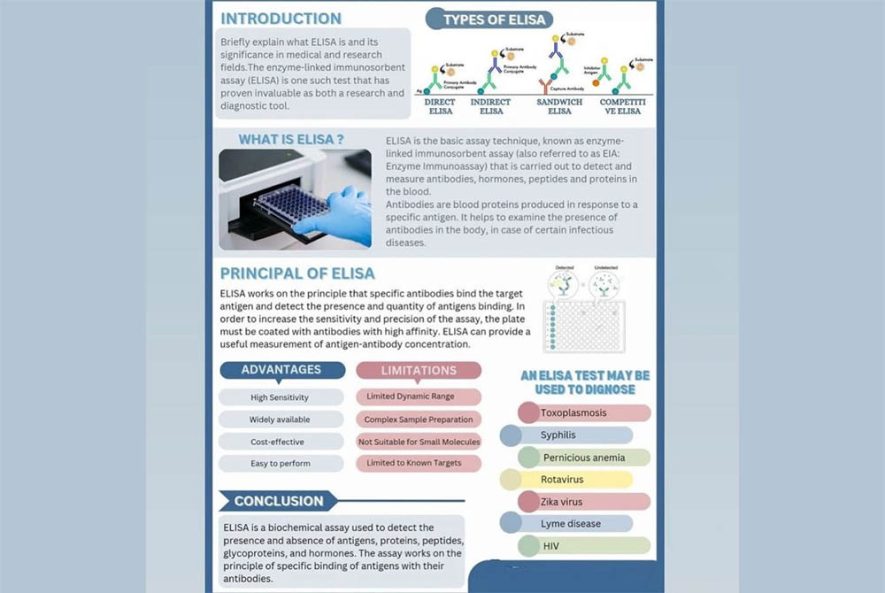
The Enzyme-Linked Immunosorbent Assay (ELISA) is a widely used biochemical test for detecting and measuring antibodies, antigens, proteins, and hormones in biological samples. It plays a crucial role in medical diagnostics, research, and disease detection.
📌 How Does ELISA Work?
✅ Relies on antibody-antigen interactions to detect the presence of specific molecules.
✅ Uses enzymes to produce a measurable signal indicating a positive or negative result.
✅ Highly sensitive and precise for quantifying biomolecules in blood or other fluids.
Types of ELISA:
🔹 Direct ELISA – Detects an antigen using a single antibody.
🔹 Indirect ELISA – Uses a primary and secondary antibody for enhanced sensitivity.
🔹 Sandwich ELISA – Captures an antigen between two antibodies for high specificity.
🔹 Competitive ELISA – Measures antigen levels by detecting competition between bound and free antigens.
Applications: What Can ELISA Detect?
Infectious diseases (HIV, Syphilis, Zika, Lyme disease, Rotavirus)
Autoimmune disorders (Pernicious anemia)
Hormone levels & biomarkers
Toxin & allergen detection
✅ Advantages:
✔️ High sensitivity & specificity
✔️ Cost-effective & easy to perform
✔️ Widely used in diagnostics & research
⚠️ Limitations:
❌ Complex sample preparation
❌ Limited to known targets
❌ Not ideal for very small molecules
💡 ELISA is revolutionizing medical diagnostics and research!