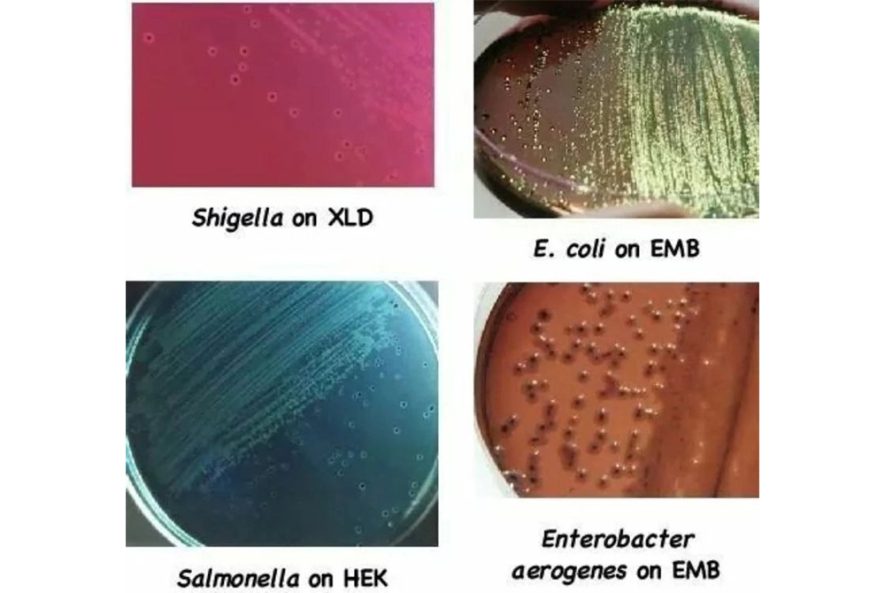
In microbiology, selective and differential media play a crucial role in isolating and identifying pathogens. Here’s how different bacteria appear on specific agar plates:
Shigella on XLD (Xylose Lysine Deoxycholate Agar) ➡️ Red colonies ❌ No xylose fermentation, differentiating it from Salmonella, which produces black-centered colonies due to H₂S production.
💚 E. coli on EMB (Eosin Methylene Blue Agar) ➡️ Metallic green sheen ✨ Strong lactose fermentation produces acid, reacting with dyes to give this distinctive appearance.
💙 Salmonella on HEK (Hektoen Enteric Agar) ➡️ Blue-green colonies with black centers ⚫️ Non-lactose fermenter with H₂S production, making it distinguishable from other enteric bacteria.
💖 Enterobacter aerogenes on EMB ➡️ Pink/mucoid colonies 🍬 Moderate lactose fermentation, differentiating it from E. coli, which has a metallic sheen.
🔬 Why is this important? ✅ Rapid identification of pathogens in clinical, food, and water testing labs ✅ Differentiation of bacteria based on metabolism & fermentation patterns ✅ Essential for diagnosing gastrointestinal infections & ensuring food safety