- 2026/08/11
- مقالات خارجی
- نظرات
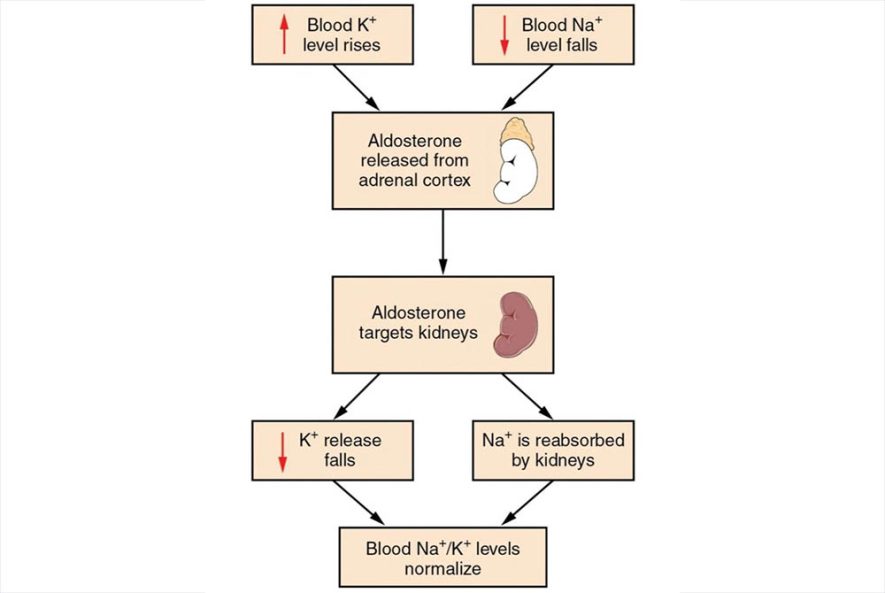
The diagram illustrates the regulation of blood potassium (K⁺) and sodium (Na⁺) levels by aldosterone, a hormone produced by the adrenal cortex.
1. Initial Triggers:
An increase in blood K⁺ (potassium) levels or a decrease in blood Na⁺ (sodium) levels stimulates the adrenal cortex to release aldosterone.
2. Aldosterone Release:
The adrenal cortex secretes aldosterone, a steroid hormone that plays a crucial role in electrolyte and fluid balance.
3. Aldosterone’s Target:
Aldosterone acts on the kidneys, specifically on the distal tubules and collecting ducts of the nephron.
4. Kidney Response:
K⁺ release decreases. The kidneys reduce the excretion of potassium, preventing excessive loss.
Na⁺ reabsorption increases. The kidneys reabsorb sodium from the filtrate, preventing further depletion.
5. Restoration of Balance:
These actions help normalize the blood Na⁺ and K⁺ levels, maintaining electrolyte homeostasis.
Physiological Importance of Aldosterone:
Regulates Blood Pressure. By controlling sodium retention, aldosterone indirectly influences water retention and blood volume.
Maintains Electrolyte Balance. Proper K⁺ and Na⁺ levels are crucial for nerve function, muscle contractions, and overall cellular activity.
Prevents Hyperkalemia and Hyponatremia. Excess potassium (hyperkalemia) can lead to dangerous heart arrhythmias, while low sodium (hyponatremia) can cause neurological issues.
Clinical Relevance:
💫 Hyperaldosteronism. Excess aldosterone leads to excessive sodium retention (hypertension) and increased potassium excretion (hypokalemia).
💫 Hypoaldosteronism/Addison’s Disease. Insufficient aldosterone results in low sodium, dehydration, low blood pressure, and hyperkalemia.