- 2026/08/01
- مقالات خارجی
- نظرات
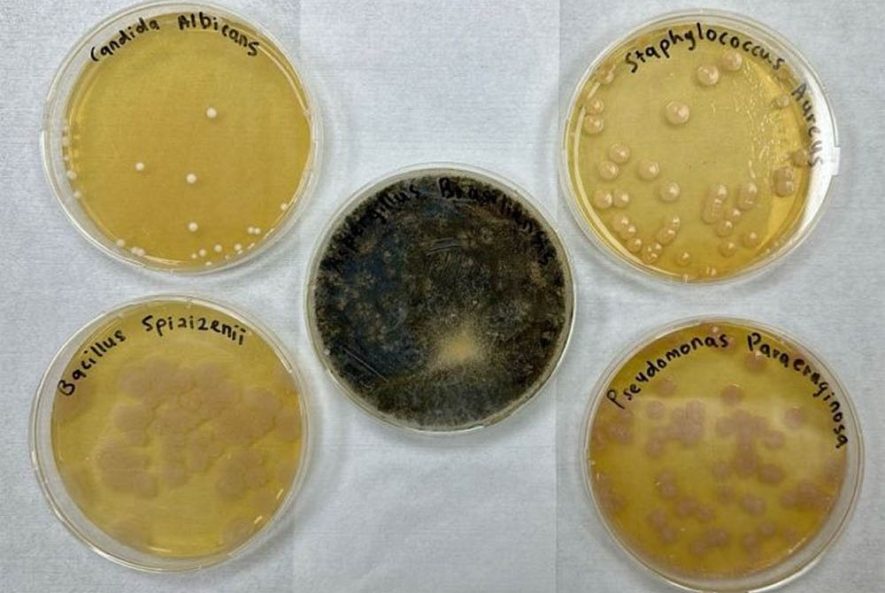
1. Bacillus sp. (Bottom left) 🦠
• Shape & Gram Stain: Rod-shaped (bacilli), Gram-positive
• Colony Morphology: Large, rough, irregular, spreading colonies
• Special Features: Forms endospores, allowing survival in extreme conditions
• Metabolism: Aerobic or facultative anaerobic
• Habitat: Found in soil, water, and some species in the human gut
• Pathogenicity: Some species are harmless, while others (Bacillus anthracis, Bacillus cereus) can cause diseases like anthrax and food poisoning
2. Candida albicans (Yeast) (Top left) 🦠
• Shape: Oval-shaped yeast, can form pseudohyphae
• Colony Morphology: Smooth, white, creamy, round colonies
• Special Features: Can switch between yeast and filamentous forms (dimorphic)
• Metabolism: Facultative anaerobe
• Habitat: Normal flora of human mouth, skin, and gastrointestinal tract
• Pathogenicity: Causes opportunistic infections like oral thrush, vaginal yeast infections, and systemic candidiasis in immunocompromised individuals
3. Aspergillus brasiliensis (Mold) (Center)🦠
• Shape: Filamentous fungus with branched hyphae
• Colony Morphology: Black, fuzzy mold with a dense spore-forming center
• Special Features: Produces airborne conidia (spores), spreads easily
• Metabolism: Aerobic
• Habitat: Found in soil, decaying organic matter, and indoor air
• Pathogenicity: Causes aspergillosis, particularly in immunocompromised individuals, affecting the lungs and sinuses
4. Pseudomonas aeruginosa (Bottom right) 🦠
• Shape & Gram Stain: Rod-shaped (bacilli), Gram-negative
• Colony Morphology: Mucoid, smooth, and pigmented (greenish-blue due to pyocyanin and pyoverdine)
• Special Features: Highly antibiotic-resistant, forms biofilms, produces a characteristic grape-like odor
• Metabolism: Aerobic but can survive in low-oxygen environments
• Habitat: Found in water, soil, hospitals, and medical equipment
• Pathogenicity: Causes opportunistic infections in burns, wounds, lungs (pneumonia), and urinary tract infections, especially in hospitalized or immunocompromised patients
5. Staphylococcus aureus (Top right) 🦠
• Shape & Gram Stain: Round (cocci), Gram-positive, arranged in grape-like clusters
• Colony Morphology: Smooth, round, golden-yellow colonies
• Special Features: Produces toxins, survives in dry and salty environments
• Metabolism: Facultative anaerobe
• Habitat: Skin, nasal passages, and mucous membranes of humans
• Pathogenicity: Causes skin infections (boils, impetigo), food poisoning, pneumonia, and severe conditions like sepsis and toxic shock syndrome. !!
✍🏻 Follow me on Science Facts to learn more if you love this post. !!🧠
💥Prepared and Written by
Shahnoor Ahmad Khan. 📚!!
🚨 I am sharing knowledge ✨ to help healthcare professionals. 📚 We want to give you a lot of information. 💡For more information, ✍🏻 follow our Telegram channel now and get all the information..