- 2026/08/15
- مقالات خارجی
- نظرات
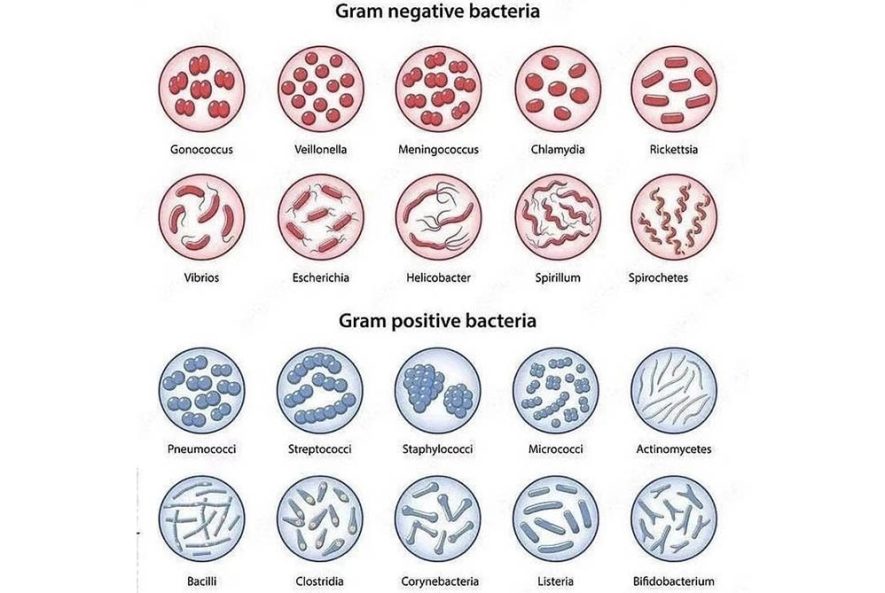
Gram-Positive vs. Gram-Negative Bacteria: Key Differences! 🔬
Did you know that bacteria are classified into Gram-positive and Gram-negative based on their cell wall structure? 🏗 A simple Gram stain test helps differentiate them, playing a crucial role in diagnosing infections and choosing the right antibiotics! 💊
🔵 Gram-Positive Bacteria
✔️ Thick peptidoglycan layer
✔️ Retains crystal violet stain 💜
✔️ No outer membrane 🚫
✔️ More susceptible to penicillins & cephalosporins 💊
🔹 Examples:
Staphylococci (e.g., S. aureus – skin infections)
Streptococci (e.g., S. pyogenes – strep throat)
Clostridia (e.g., C. difficile – gut infections)
🔴 Gram-Negative Bacteria
✔️ Thin peptidoglycan layer 🏗
✔️ Does not retain crystal violet, stains pink/red ❤️
✔️ Has an outer membrane with LPS (endotoxin) ⚠️
✔️ More resistant to antibiotics due to efflux pumps 🚫💊
🔹 Examples:
Escherichia (E. coli – UTIs & gut infections)
Neisseria (e.g., N. meningitidis – meningitis)
Helicobacter (H. pylori – ulcers)
🎯 Why Is This Important?
✅ Helps in targeting infections effectively 🏥
✅ Guides antibiotic selection 💊
✅ Plays a key role in microbiology & medicine 🔬
💡 Fun Fact: Gram-negative bacteria are often harder to treat due to their outer membrane, which makes them more resistant to antibiotics! 🚨