- 2026/05/19
- مقالات خارجی
- نظرات
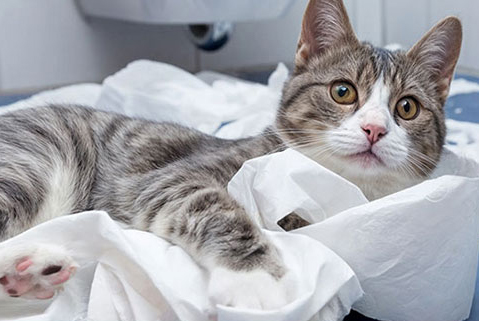
Vomiting describes the active evacuation of food from the stomach. Vomiting may be caused by disorders of the stomach but is a clinical sign that can occur with many diseases and problems.
It is not a specific disease or diagnosis itself. Cats vomit quite readily and occasional vomiting (less than once a month) in an otherwise healthy cat may not indicate anything abnormal. This is particularly true if the vomited material is mainly hair. It is considered a normal process for cats to swallow hair while they are grooming themselves, and they will vomit hairballs periodically. If your cat is vomiting hairballs more than once a month, contact your veterinarian.
If it is normal, then how serious can vomiting be?
It depends on the cause of vomiting. Most cases of acute vomiting, when vomiting has been present for less than two to three days, resolve quickly with simple treatment, without the underlying cause being diagnosed. Severe or chronic vomiting is more serious. It can lead to secondary problems, particularly dehydration and disturbances in the levels of electrolytes such as sodium.
Vomiting can be caused by minor intestinal upset, such as from eating plants, spoiled food, or foul-tasting things such as certain insects. However, vomiting can also be a sign of a more serious illness, such as bacterial or viral infection, intestinal obstruction from foreign bodies (indigestible objects that get stuck in the intestine or stomach), urinary tract obstruction, liver disease, thyroid disease, inflammatory bowel disease, or cancer. Left untreated, these illnesses can lead to serious complications, including death.
How do I recognize vomiting?
Vomiting may begin with a stage of nausea, in which the cat appears restless, and possibly anxious. The cat may lick its lips, salivate, and repeatedly swallow. Vomiting itself involves forceful contractions of the abdominal muscles, leading to expulsion of fluid, froth, or food. The severe effort associated with vomiting may be distressing to the cat.
It is important to differentiate this from the abdominal contractions associated with coughing. Cats may cough up some froth or foamy material that they subsequently swallow. Cats usually crouch down on all four legs when coughing with the neck stretched out. It is helpful if you can show a video to your veterinarian of your cat exhibiting the behavior so they can help you distinguish coughing versus vomiting.
It is also important to differentiate vomiting from regurgitation, which is usually associated with problems affecting the esophagus and is a more passive process. Features that help to differentiate vomiting from regurgitation include:
vomiting typically involves abdominal contractions and effort
regurgitation typically occurs quickly without abdominal contractions
regurgitation often occurs right after eating or drinking
What does acute vomiting mean?
Acute vomiting is vomiting that has been present for no more than two to three days. Most cases will respond quickly to simple symptomatic treatment. The cause of such cases is often never established and may be due to relatively trivial factors such as eating spoiled food or plants. In a small number of cases of acute vomiting, usually because the vomiting is severe and leads to complications such as dehydration, or because a more serious underlying cause is suspected, further tests, specific treatment, and aggressive supportive care will be required.
What is the symptomatic treatment for acute vomiting?
Non-specific symptomatic treatment is often prescribed initially in mild cases of acute vomiting. Your veterinarian will usually advise you to feed your cat an easily digested, bland diet in small quantities given frequently. A veterinary prescription diet specifically formulated to be easy to digest is often recommended.
Alternatively, a specific home-cooked diet may be recommended. It is important that your cat does not receive any other foods other than what your veterinarian advises during this period.
Water should be freely available and is important to prevent dehydration. If your cat is improving, the quantity of food offered at any one time can gradually be increased back to a normal quantity and then your cat’s normal diet can be reintroduced gradually over several days …
Reference:
https://vcahospitals.com/know-your-pet/vomiting-in-cats